
Explore the TavanMind Clinical Suite
A complete clinical workspace for cognitive testing, session documentation, behavioral reporting, longitudinal monitoring, and responsible clinical decision support.
TavanMind connects cognitive test results with structured clinical sessions, patient records, therapist notes, reliability checks, and follow-up reports inside one professional workflow.
One Platform for Cognitive Assessment and Clinical Follow-Up
TavanMind is designed for clinics that need more than isolated test scores. It helps professionals assess, document, review, and monitor patient performance over time.
Cognitive Test Battery
Run structured tasks for attention, inhibition, working memory, processing speed, executive control, and visual discrimination.
Clinical Sessions Workspace
Link same-day cognitive tests into a clinical session and document engagement, impressions, interventions, goals, outcome, and notes.
Professional Reports
Convert raw test performance into readable behavioral summaries with domain status, reliability information, and descriptive interpretation.
Longitudinal Monitoring
Review performance across sessions, compare repeated assessments, and follow each patient’s cognitive trajectory over time.
From Test Execution to Clinical Documentation
TavanMind supports the full path from objective cognitive testing to therapist-led clinical documentation.
Select a Patient
Start from a patient profile and keep test results, sessions, reports, and follow-up records organized under the same clinical history.
Run Cognitive Tests
Administer objective tests across multiple cognitive domains dynamically, recording accuracy, reaction times, and stability.
Generate Reports
Automatically synthesize reaction times, accuracy, and reliability checks into highly structured, printable findings.
Review Trends
Compare performance against patient baselines over multiple sessions to check for stability, improvement, or decline.
Document Decisions
Combine objective cognitive scores with therapist observation notes to establish stable clinical follow-up plans.
Clinical Sessions Workspace
Link same-day cognitive tests into a clinical session and document engagement, impressions, interventions, goals, outcome, and notes.
Therapist Observations
Document clinical impressions, patient effort, distractibility, cooperative engagement, and anxiety during the session.
Goal Setting & Notes
Track session-specific intervention goals, patient feedback, therapeutic strategies, and home-care recommendations.
Combined Outcome Metrics
Integrate objective cognitive battery results with standard behavioral notes for a unified, comprehensive digital archive.
Automatically Generated Analysis
Generate structured session analysis from linked tests, therapist notes, and outcome metrics to support faster clinical review.
Patient Follow-Up & Longitudinal Progress
Review performance across sessions, compare repeated assessments, and follow each patient’s cognitive trajectory over time.
Longitudinal Tracking
Track progress over weeks, months, or years with precise reaction time and accuracy baseline comparisons.
Trend Identification
Easy visual identification of cognitive trends to check whether performance is improving, declining, or remaining stable.
Multidisciplinary Sharing
Secure and clear report formats ready to share with referring physicians, school systems, or family members.
Reliability Correlated
Every trend line cross-references the reliability guard scores to ensure noisy outliers don't skew clinical insights.
Cognitive Domains Covered
Structured testing designed to isolate and measure specific executive, attention, and visual processing functions.
Sustained Attention
Assessment of attention maintenance, omission rates, and reaction consistency over extended periods of repetition.
Response Inhibition
Commission error analysis and impulse control tracking under selective attention pressure.
Processing Speed
Reaction stability, raw cognitive response times, and sub-millisecond variations across modules.
Working Memory
Active visual and spatial working memory updating capacity assessed via dynamic progressive tasks.
Executive Control
Interference control, distractor suppression, and mental task switching metrics.
Visual Discrimination
Accurate visual feature analysis, figure-ground coherence, and spatial consistency without motor bias.
11-Task Standardized Test Battery
A comprehensive selection of cognitive assessment tasks custom-built for high-precision digital touch and click hardware.
Continuous Performance Standard
Traditional letter-based continuous attention assessment.
Continuous Performance Geometric
Language-free shape matching, ideal for multilingual patients.
Continuous Performance Spatial
Assess spatial location changes and visual field attention focus.
Flanker Interference Standard
Standard directional arrow arrays measuring selective focus.
Flanker Spatial Conflict
Conflict resolution in spatially separated target arrays.
Flanker Task Switching
Cognitive flexibility measuring task-rule switching costs.
Directional Stroop
Arrow direction conflict with spatial positioning.
Classic Color Stroop
Traditional word-color mismatch conflict response suppression.
Visual N-Back
Assess progressive working memory update load (1-back, 2-back).
Spatial Location N-Back
Multi-level spatial location memory updating assessment.
Digit Span Forward & Backward
Auditory-visual short term storage and active processing span.
Visual Discrimination Task
Motor-free evaluation of perceptual accuracy and shape details.
Continuous Performance Test (CPT) Suite
Deep-dive into continuous performance assessment variations targeting sustained attention and impulsivity control.
Sustained Attention Assessment
Accurately record omission errors (failed to respond to target) and commission errors (incorrect response to distractor) across long repetitive runs.
Standard CPT Profile
Traditional letter-based continuous assessment requiring rapid response execution and selective inhibition under millisecond timing conditions.
Language-Free Geometric & Spatial CPT
Language-independent shape and grid location matching. Essential for clinical children assessments or multilingual environments.
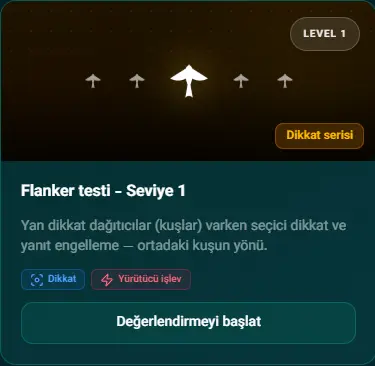
Flanker Task Stimulus Array
Flanker Task Suite
Analysis of congruent and incongruent selective attention tasks measuring interference control and cognitive flexibility.
Selective Attention Distractor Suppression
Isolate central targets flanked by highly distracting congruent or incongruent arrow cues.
Interference Cost Calculations
Measure executive processing efficiency by evaluating the exact millisecond differences between congruent and conflict reaction times.
Standard, Spatial & Switching Variants
Advanced cognitive load scaling using spatial target separations and task switching instructions.
Directional Stroop Conflict
Measuring processing speed and cognitive interference through the classic Stroop effect adapted for directional arrows.
Conflict Resolution Metrics
Evaluate response execution when arrow directions clash with spatial locations on the touch screen.
Suppressing Prepotent Habits
Track errors and latency as clinicians assess a patient’s raw capability to override immediate visual reflexes.
Millisecond Reaction Times
High-integrity timing captures microsecond changes in decision thresholds during conflict blocks.

Trigger Match: Current "A" matches 2-back "A"!
Visual & Spatial N-Back Updating
Exploration of working memory load and continuous online updating capacity using 1-back, 2-back, and 3-back difficulty tiers.
Memory Load Tiers
Progression from simple 1-back memory checks to highly demanding 2-back and 3-back memory load assessments.
Stimulus Location Matching
Determine matched visual shapes or grid spatial coordinate repetitions in high-speed trial queues.
Update Rate Calculations
Detailed tracking of accuracy patterns and latency trends across progressive memory loads.
Digit Span Capacity Suite
Auditory and visual working memory span tests assessing raw retention (Forward) and mental manipulation (Backward) limits.
Short-Term Storage Limits
Standard Forward trial progression identifies the absolute number of visual or auditory items a client retains in temporary store.
Active Backward Manipulation
Backward trials challenge central executive resources by requiring clients to mentally reverse digit sequences before entering responses.
Precise Trial Calibration
Adaptive block difficulty adds or subtracts sequence items based on direct real-time response success.

Visual Discrimination Task
Assessment of spatial and perceptual parameters evaluating visual efficiency and details discrimination without motor interference.
Motor-Free Assessment Pathway
Assess pure perceptual accuracy and shape details discrimination without fine motor coordination biases.
Geometric Figure Ground Matching
Complex structural tasks isolating visual features, spatial rotation matching, and figure-ground coherence.
Standardized Capacity Output
Convert response accuracy and stability parameters into clinically validated percentile ranks immediately.
Clinical Behavioral Reports
Convert raw task response metrics into professional, structured diagnostic decision support summaries automatically.
Direct Metric Summarization
Synthesize response accuracy, mean reaction times, and cognitive stability indexes across all completed modules immediately.
Normative Baseline Comparisons
Position test session parameters against patient baselines over multiple sessions to extract clean longitudinal trajectories.
Descriptive Narrative Context
Translate statistical variables into accessible clinical summaries highlighting specific domain performance details.
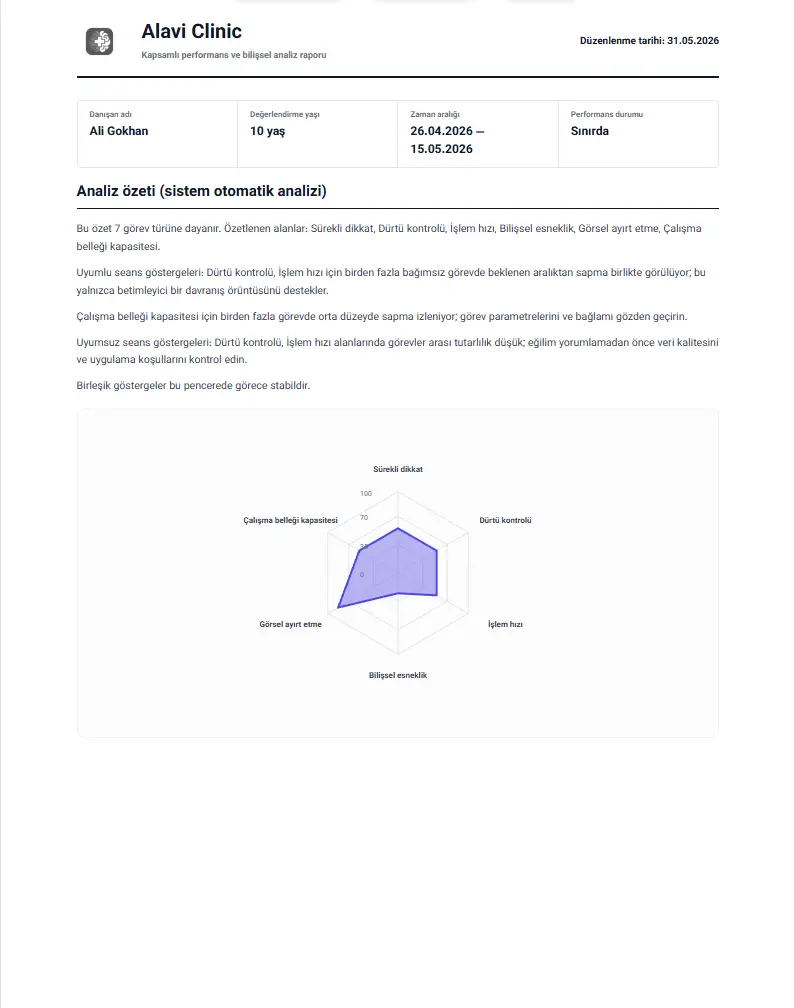
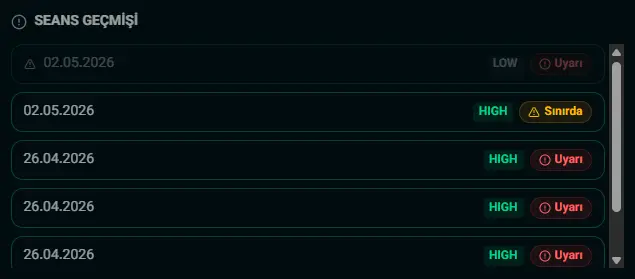
Data Reliability Guard
High-integrity validation filters checking for timing errors, random responding, and low-attention flags to keep longitudinal data clean.
Low-Attention Flags
Smart detection system identifies invalid sessions or high-omission trials resulting from sudden client distractions.
Timing Hardware Integrity Checks
Verification systems ensure click/touch hardware input timing reports are clean and valid down to the sub-millisecond layer.
Valid Baseline Protection
Prevent skewed clinical profiles by automatically separating invalid sessions from stable baseline trends.
Scoring & Clinical Interpretation Math
Standardized z-scores, percentile ranks, and confidence intervals calculated automatically against dynamic baselines.
Standardized Z-Scores
Convert raw numbers into normalized z-scores immediately, allowing direct comparisons across different test modules.
Mathematical Transparency
Clinicians have access to raw reaction time sheets, hit rates, and full mathematical variables underlying every output metric.
Ethical Limits Documentation
Clear boundaries outlined in scoring reports remind teams about z-score interpretation ranges and statistical confidence.
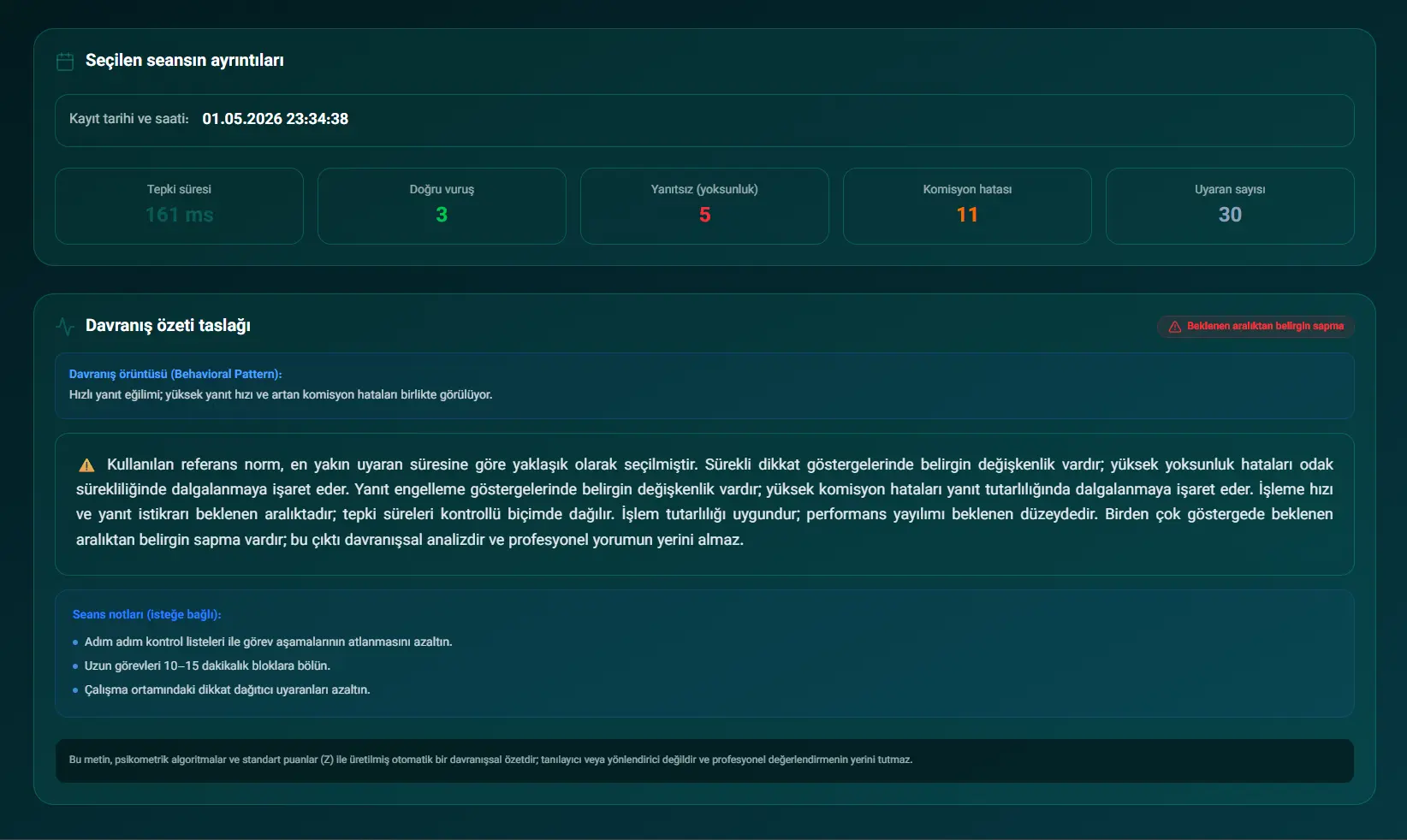
Clinical Dashboard Workspace
Secure, local clinic administration tool for organizing patient files, custom battery setup, and multiple clinician profiles.
Dynamic Patient Registers
Manage histories, session plans, historical z-score profiles, and therapist remarks under specific clinical IDs.
Pre-session Battery Builders
Save setup times by designing and pre-scheduling custom module sequences suited for specific patients.
Multi-User Access Controls
Provide specific clinic licensing seats, keeping records organized yet isolated among team therapists.
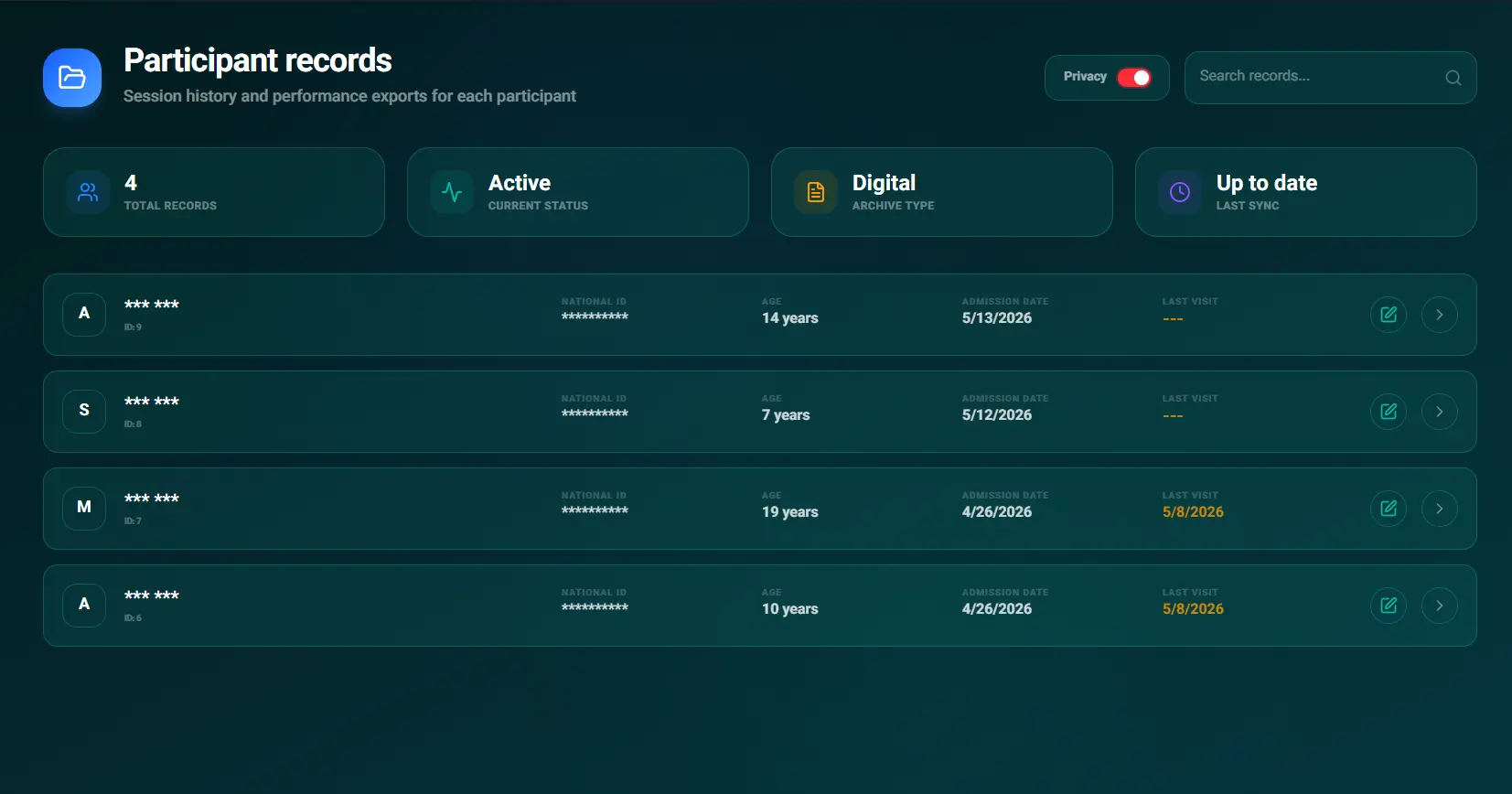
Privacy, HIPAA, KVKK & GDPR-Compliant Architecture
Designed to support clinics serving patients in countries that are under regulations of HIPAA, KVKK, and GDPR with aligned privacy safeguards. Local-first SQLite databases, end-to-end client-side metadata encryption, and pseudonymized diagnostic scores.
Encrypted SQLite Local Database
Keep sensitive records inside your physical clinic walls. Local data is fully locked using AES-256 standard encryption keys.
Metadata Pseudonymization
Names are held separate from score lists. Diagnostics sync via random hash tokens to eliminate clinical identifying paths.
Zero Leakage Architecture
No remote cloud databases or third-party analytic trackers sync during typical assessment execution.
Responsible Clinical Use & Non-Diagnostic Positioning
TavanMind is designed to support clinical reasoning, not replace it. Reports summarize behavioral patterns and remain subject to professional oversight.
Descriptive Reports
Reports summarize behavioral and statistical performance patterns rather than locking in diagnostic labels.
Professional Oversight
The clinician remains responsible for final interpretation, case formulation, and treatment decisions.
Clear Disclaimers
All exported files include clinical limitations, non-diagnostic positioning, and timing error disclaimers.
Responsible Validation Pathway
TavanMind is prepared for pilot clinic feedback, empirical norm-building, and future validation work.
Help Shape the Future of Cognitive Assessment Norms
TavanMind is inviting selected professional clinics to participate in structured pilot workflows, empirical norm-building, and clinical reporting refinement.
Clinics contributing to standardization and workflow feedback may be eligible for one year of complimentary professional access.
Participation is subject to eligibility review, data privacy requirements, and pilot program terms. TavanMind provides clinical decision support and does not replace professional judgment or issue standalone diagnoses.
Want to See the Clinical Suite in Action?
Explore how TavanMind supports cognitive testing, session documentation, clinical reporting, patient follow-up, and responsible decision support inside a real clinic workflow.